
Concerns
Rosacea, Redness & Facial Flushing
Reactive skin has reasons worth understanding.
What's happening beneath the skin
What's happening beneath the skin
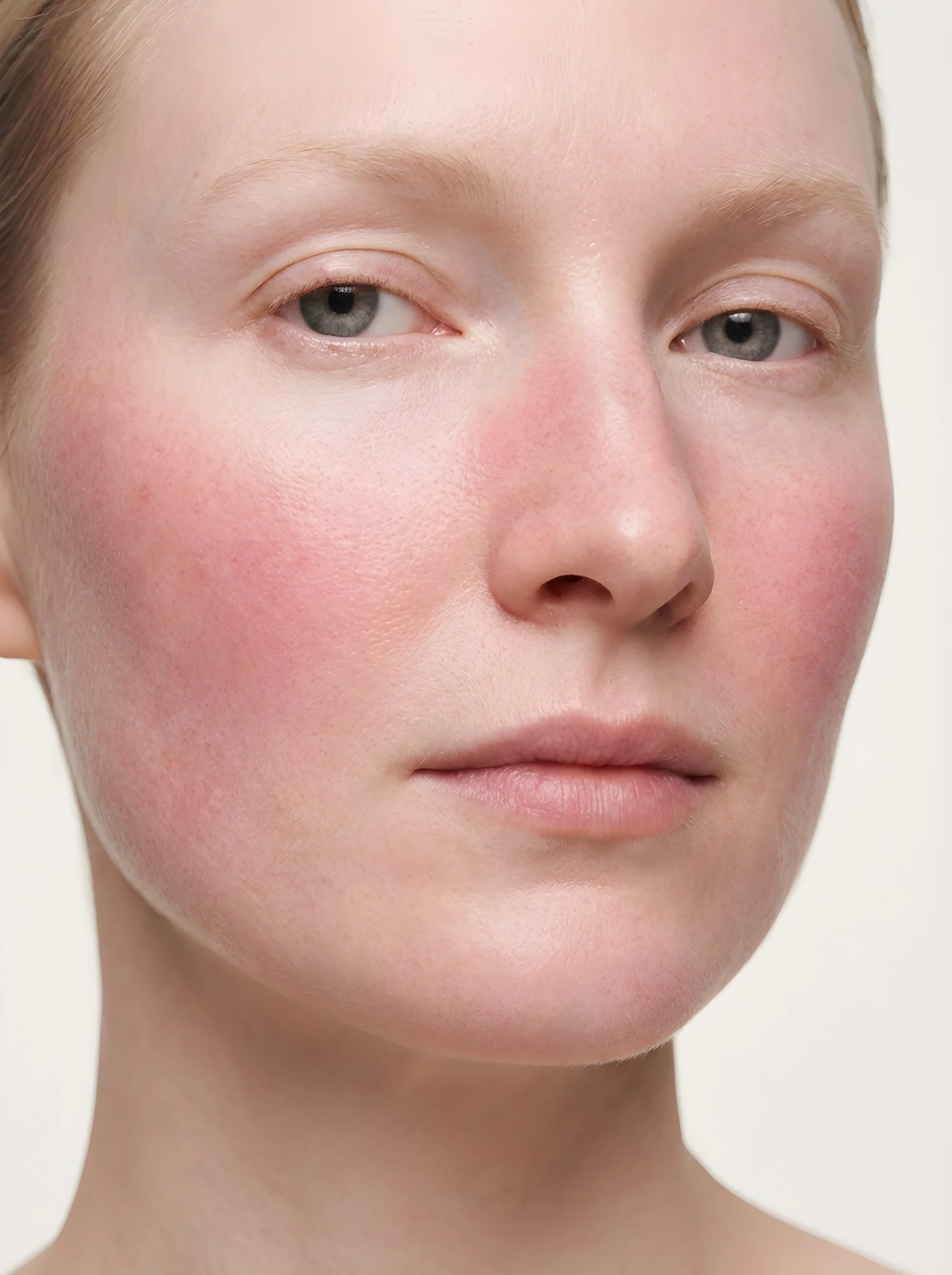
Persistent facial redness and rosacea are closely connected. Rosacea is the most common underlying cause of redness that does not go away, but not everyone with chronic redness has a formal diagnosis. This page covers both: the full spectrum from reactive, flushing skin to established rosacea, and how to manage it.
The redness and flushing visible at the skin surface originates in the network of small blood vessels just beneath it. Under normal conditions, these vessels dilate and constrict in response to temperature, emotion, and physical activity, and then return to their resting state.
In people with persistent redness, this system becomes dysregulated. Capillaries near the surface dilate more readily than normal, stay dilated for longer, and in some cases lose the ability to constrict back at all. Over time, vessel walls weaken and the vessels become permanently visible through the skin as fine red lines or a diffuse red tone.
Rosacea is a chronic inflammatory skin condition that compounds this vascular instability. The immune system becomes chronically dysregulated, producing low-grade inflammation even without an obvious trigger. In some patients, a microscopic skin mite called Demodex, which is present on most people's skin in small numbers, proliferates in larger quantities and triggers an inflammatory response. Neural hypersensitivity also plays a role, amplifying the flushing response to heat, emotion, and other stimuli beyond what the trigger would normally produce.
The result is skin that is simultaneously sensitive, reactive, and structurally compromised, and that responds poorly to products and environments that others tolerate without difficulty.
Causes
Causes
Genetic predisposition is the strongest risk factor for rosacea. It tends to run in families and is more common in people of Northern European descent, though it affects all ethnicities. Fair skin with thinner vessel walls is more susceptible to visible redness regardless of rosacea.
Triggers do not cause rosacea but they worsen and accelerate it. The most common include ultraviolet (UV) radiation, heat, strenuous exercise, alcohol, spicy food, hot drinks, and stress. Each of these causes vascular dilation that, in rosacea-prone skin, fails to return to baseline as it should.
Chronic sun exposure accelerates capillary damage and dilates vessels over time in all skin types. Certain medications, particularly long-term topical corticosteroids, also contribute to surface vessel fragility.
An imbalanced skin microbiome, specifically an overgrowth of Demodex mites, is a recognised driver in a significant proportion of rosacea patients. Identifying whether this is a factor affects treatment selection.
Daily & Ongoing Care
Daily & Ongoing Care
Managing redness and rosacea well is largely about reducing trigger exposure while supporting a compromised skin barrier. The two work together: a stronger barrier means less reactivity, and fewer triggers means less cumulative vascular damage.
At home:
- SPF 50 or higher daily. UV radiation is the single most consistent trigger and long-term accelerator of redness and rosacea.
- A mineral sunscreen with zinc oxide is preferred. Chemical filters can irritate reactive skin.
- Gentle, fragrance-free cleanser and moisturiser only. Anything harsh, exfoliating, or heat-generating will worsen reactivity.
- Niacinamide calms redness, strengthens the skin barrier, and is well tolerated by most sensitive skin types.
- Azelaic acid has anti-inflammatory and antimicrobial properties and has evidence specifically for rosacea management.
- Keep a trigger diary if flares are unpredictable. Identifying personal triggers is one of the most practical steps a patient can take.
- Avoid topical corticosteroids on the face. Long-term use thins the skin and worsens both redness and rosacea over time.
Professional treatments:
- Excel V and Vbeam are vascular lasers that selectively target and destroy dilated blood vessels, reducing both visible capillaries and diffuse redness over a series of sessions.
- Laser Genesis delivers gentle heat to reduce diffuse redness and vascular reactivity with no downtime, and is well suited to ongoing maintenance.
- Sylfirm X is specifically designed to address abnormal vasculature and chronic inflammation at a deeper tissue level, and is considered a strong option particularly for patients who have not responded fully to vascular laser alone.
Rosacea and chronic redness are best managed as ongoing conditions rather than one-time concerns. Professional treatments combined with consistent daily care and trigger avoidance produce the most durable results.
Related
Related Resources
Depending on the type and severity of acne, clinicians may recommend one or a combination of the following treatments:

Not sure what’s right for you?
Schedule a complimentary consultation with our experts to discuss your needs
ARTICLES
Related Articles

Skin Quality Is Everything. Here’s What That Actually Means.
Your skin has a surface quality — texture, tone, radiance — that most aesthetic treatments don’t actually address. It’s a specific thing. And there are specific treatments for it.

What Your Aesthetic Expert Sees That You Don't
A trained clinician isn't looking at the concern you came in with. They're looking at the whole picture. Understanding that gap is where better outcomes start.