
Concerns
Acne & Breakouts
A condition with causes and real answers.
What's happening beneath the skin?
What's happening beneath the skin?
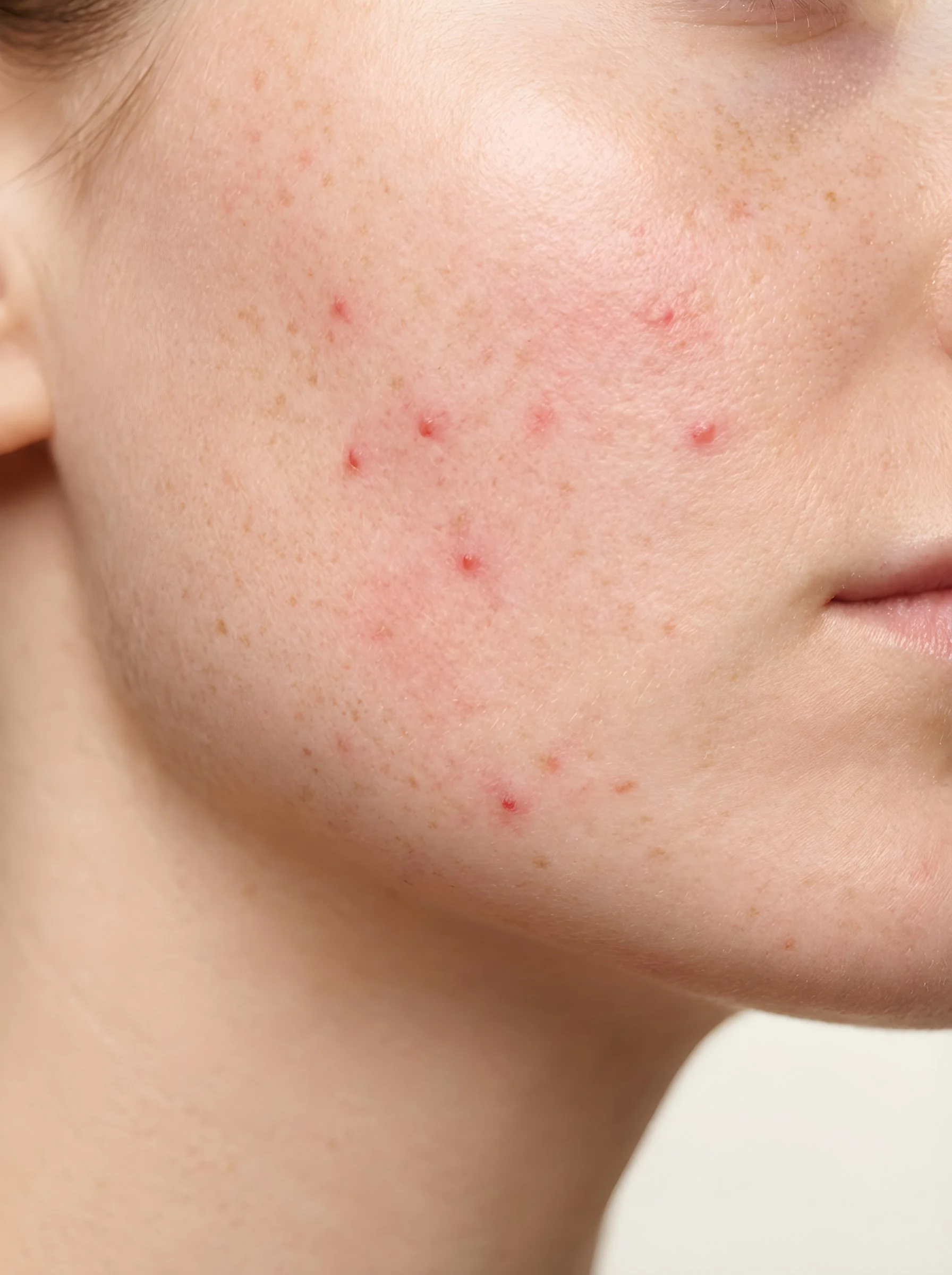
Acne is one of the most common skin conditions, and one of the most consistently undertreated. It is a chronic inflammatory condition that requires consistent, targeted management to bring under control.
Acne develops when hair follicles become clogged with a combination of excess sebum, dead skin cells, and bacteria. When the follicle is blocked but the pore remains closed, a whitehead forms. When it is open to the air, the contents oxidise and darken into a blackhead. When the blocked follicle becomes inflamed, papules and pustules develop. In the most severe cases, the inflammation drives deep into the dermis, forming nodules and cysts that can cause lasting scarring.
The bacteria most commonly involved, Cutibacterium acnes, is a normal resident of the skin. It becomes problematic when follicles are clogged and anaerobic conditions allow it to proliferate. This triggers an immune response that drives the redness, swelling, and pain characteristic of inflammatory acne.
Causes
Causes
- Hormonal fluctuations are among the most significant drivers, particularly during puberty, the menstrual cycle, pregnancy, and in conditions like PCOS. Androgens stimulate the sebaceous glands to produce more oil, creating the conditions in which acne thrives.
- Stress elevates cortisol, which in turn increases sebum production and amplifies inflammation.
- Genetics plays a strong role in determining how reactive the sebaceous glands are and how the immune system responds to bacterial colonisation.
- Certain skincare products, particularly those that block pores, can exacerbate existing acne.
- Diet may also be a contributing factor for some people, though the evidence is still developing.
Daily & Ongoing Care
Daily & Ongoing Care
Consistent daily care is one of the most effective tools for managing acne. The goal is to keep pores clear, reduce bacterial load, and protect the skin barrier without triggering further inflammation.
At home:
- Cleanse twice daily with a gentle, non-comedogenic cleanser. Avoid over-washing, which strips the barrier and increases oil production.
- Use a non-comedogenic moisturiser. Dry or compromised skin is more prone to irritation and inflammation, not less.
- SPF 30 or higher daily, especially when using active ingredients that increase sun sensitivity.
- Active ingredients that support acne management include salicylic acid, benzoyl peroxide, niacinamide, and retinoids. Introduce these gradually and avoid layering multiple actives at once.
- Avoid touching your face and change pillowcases regularly to reduce bacterial transfer.
For professional treatments:
- Maintain a consistent skincare routine between sessions to support results.
- Follow your provider's specific pre- and post-treatment guidance, particularly around active ingredients.
Related
Related Resources
Depending on the type and severity of acne, clinicians may recommend one or a combination of the following treatments:

Not sure what’s right for you?
Schedule a complimentary consultation with our experts to discuss your needs
ARTICLES
Related Articles

Skin Quality Is Everything. Here’s What That Actually Means.
Your skin has a surface quality — texture, tone, radiance — that most aesthetic treatments don’t actually address. It’s a specific thing. And there are specific treatments for it.

What Your Aesthetic Expert Sees That You Don't
A trained clinician isn't looking at the concern you came in with. They're looking at the whole picture. Understanding that gap is where better outcomes start.

Good Results Come From a Single Approach. Remarkable Ones Rarely Do.
Why combining approaches produces outcomes a single method can’t — and what to look for in a provider who does it well.