
Concerns
Visible Vessels
Visible vessels are permanent — until treated.
What’s happening beneath the skin?
What’s happening beneath the skin?
Spider veins, broken capillaries, and telangiectasia are vascular lesions that appear on the face and body and do not fade on their own. They tend to develop gradually and multiply over time, but they respond well to targeted professional treatment.
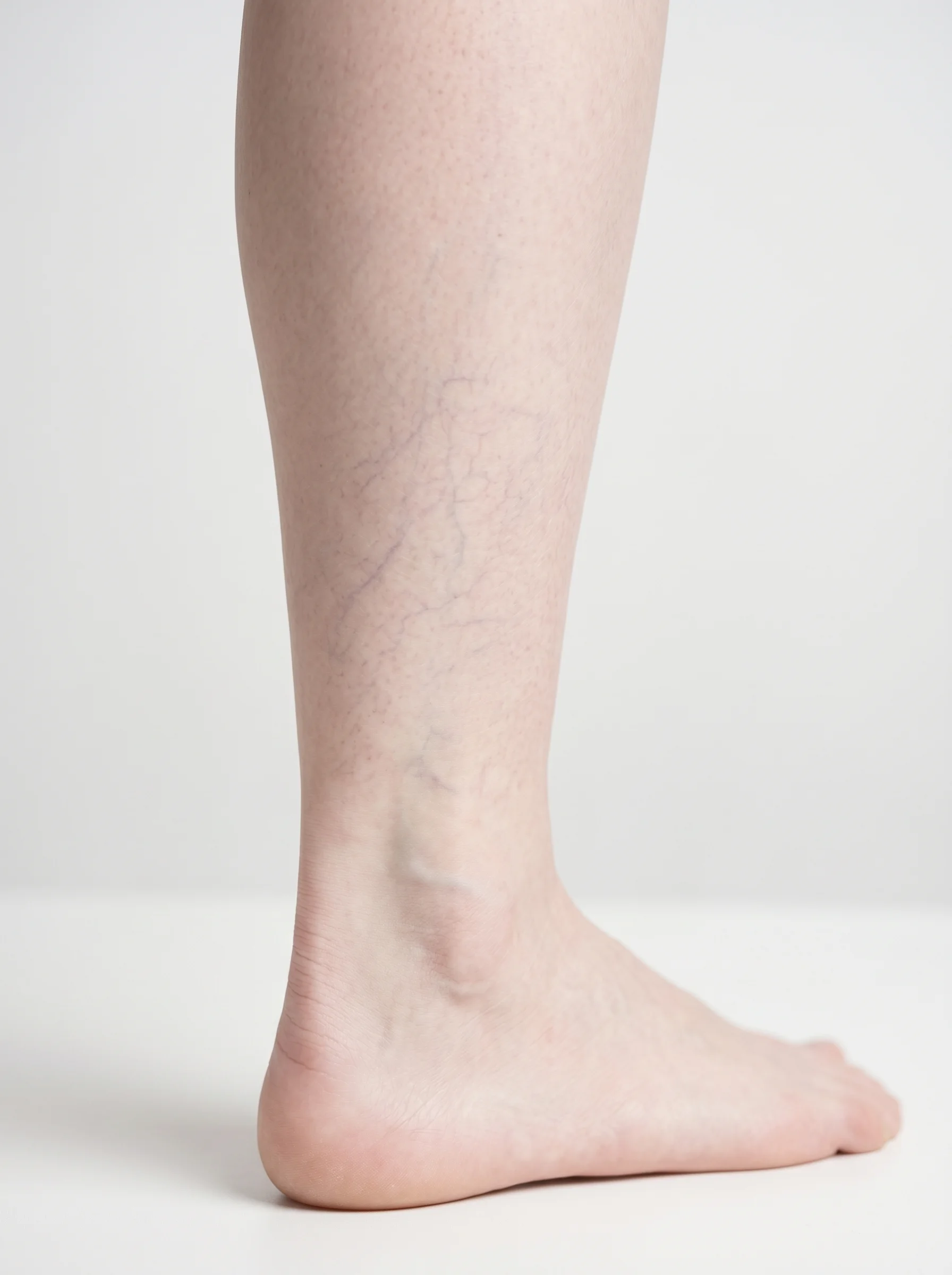
Visible vessels form when blood vessel walls weaken or stretch permanently, leaving them dilated and visible through the skin. These are discrete structural lesions, individual vessels that have lost their normal tone and will not close without treatment.
On the face, telangiectasia and broken capillaries most commonly appear on the cheeks, nose, and chin. The vessel wall loses its ability to constrict, leaving a fine red or purple line permanently visible at or just beneath the skin surface.
On the legs, spider veins form through a different mechanism. Increased pressure in the venous system forces blood into superficial vessels that are not designed to carry it. The vessel walls stretch under this pressure and remain dilated. Spider veins typically appear as a web-like network of red, blue, or purple lines on the thighs, calves, and ankles.
Causes
Causes
Genetic predisposition to vessel wall fragility is a significant factor. Many patients with visible vessels have a family history of the same concern.
Chronic ultraviolet (UV) radiation gradually weakens capillary walls on the face over years. This is why facial vessels often appear most prominently on sun-exposed areas.
On the legs, prolonged periods of standing or sitting increase venous backpressure and are a contributing factor. Hormonal changes, particularly during pregnancy and with the use of hormonal contraceptives, increase vessel wall laxity. Weight gain adds to venous load.
Age plays a role in both locations. As the surrounding tissue thins and collagen support decreases, vessels become more visible even without direct structural changes to the vessel itself.
Daily & Ongoing Care
Daily & Ongoing Care
Once visible vessels have formed, they require professional treatment to clear. Daily care focuses on protecting treated skin and slowing the development of new vessels.
At home:
- SPF 50 or higher daily. UV radiation contributes to capillary wall damage on the face over time.
- A mineral sunscreen with zinc oxide is well tolerated on vascular-reactive skin.
- Avoid repeated extreme temperature changes such as very hot showers or saunas, which place ongoing stress on vessel walls.
- For leg veins: compression stockings during prolonged periods of standing or sitting help reduce venous pressure.
Professional treatments:
- Excel V and Vbeam are vascular lasers that deliver light energy absorbed by haemoglobin in blood vessels, heating and collapsing the vessel wall. Both are used for facial telangiectasia, broken capillaries, and spider veins on the legs.
- Laser Genesis addresses very fine, diffuse facial capillaries through a series of gentle sessions with no downtime.
Related
Related Resources
Depending on the type and severity of acne, clinicians may recommend one or a combination of the following treatments:

Not sure what’s right for you?
Schedule a complimentary consultation with our experts to discuss your needs
ARTICLES
Related Articles

Skin Quality Is Everything. Here’s What That Actually Means.
Your skin has a surface quality — texture, tone, radiance — that most aesthetic treatments don’t actually address. It’s a specific thing. And there are specific treatments for it.

What Your Aesthetic Expert Sees That You Don't
A trained clinician isn't looking at the concern you came in with. They're looking at the whole picture. Understanding that gap is where better outcomes start.