
Concerns
Sun Damage & Age Spots
Cumulative. Visible. Very much addressable.
What's happening beneath the skin
What's happening beneath the skin
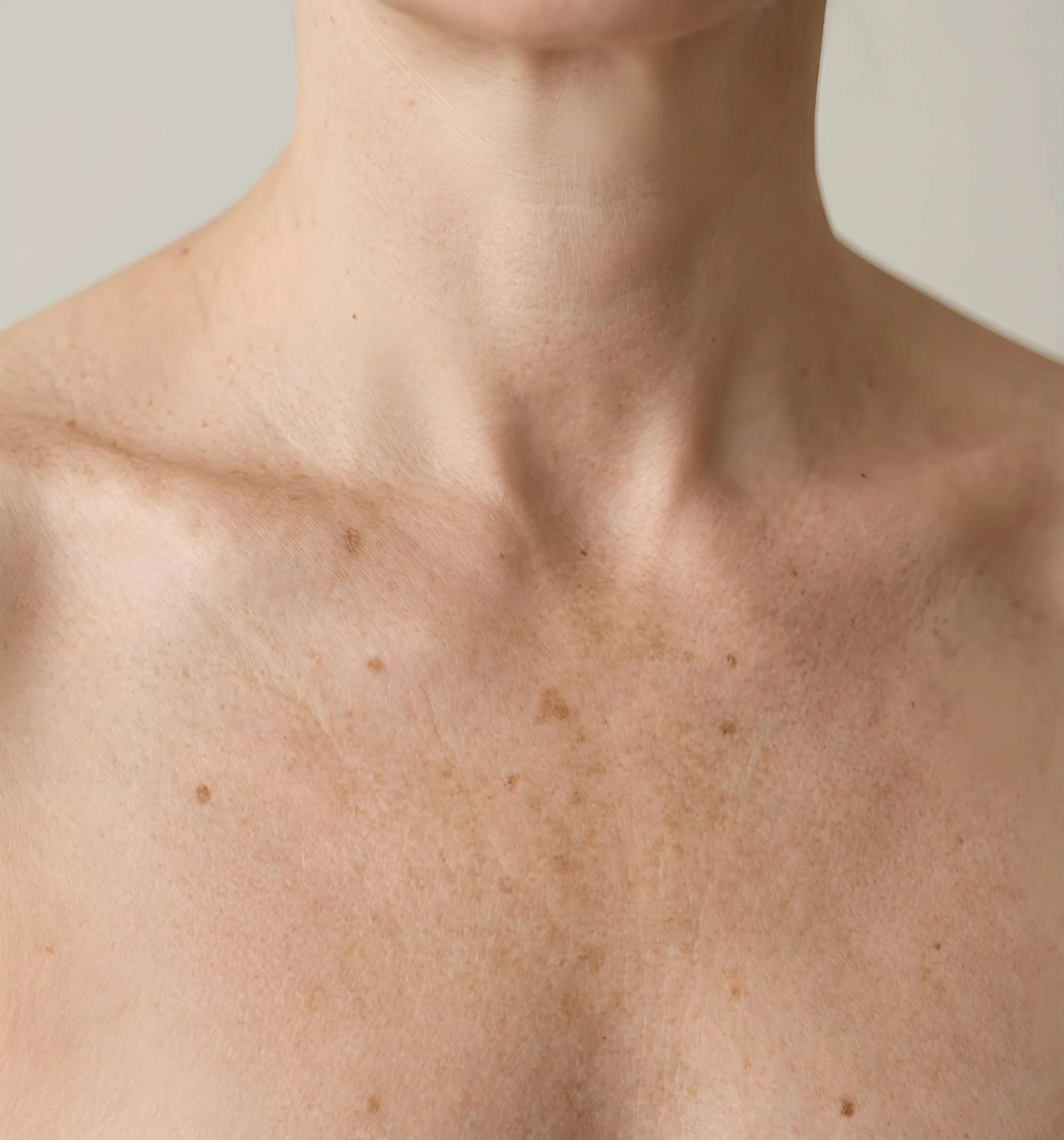
Sun damage is cumulative. It builds quietly over years of exposure and becomes visible as flat dark spots, uneven tone, and textural changes on the skin. Age spots are one of the more visible signs of this process, and while they develop slowly, they can be significantly reduced with the right treatment.
The skin contains specialised cells called melanocytes that produce melanin as a protective response to ultraviolet (UV) radiation. With repeated sun exposure over years, melanocytes in specific areas become chronically overactive. Rather than distributing melanin evenly, they deposit concentrated clusters that form flat, pigmented lesions at the skin surface.
These lesions, known as solar lentigines or age spots, differ from freckles, which are genetically determined and tend to fade with reduced sun exposure. Age spots are permanent without treatment.
Sun damage also affects the skin's structural proteins. Repeated exposure fragments collagen and disorganises elastin fibres, producing the rough texture and uneven tone associated with significant photoageing over time.
Causes
Causes
Cumulative sun exposure is the cause. It builds over a lifetime, which is why age spots tend to appear and multiply with age and become more pronounced on areas of consistent exposure such as the face, neck, chest, forearms, and hands.
Genetic predisposition influences how reactive melanocytes are and how efficiently the skin repairs damage. Fair skin types accumulate visible sun damage more readily because lower melanin levels provide less natural protection, though photoageing occurs in all skin types with sufficient exposure over time. Certain medications increase photosensitivity and can accelerate pigmentation development.
Daily & Ongoing Care
Daily & Ongoing Care
Preventing further sun damage is as important as treating existing spots. Any treatment progress will be undermined by ongoing unprotected exposure.
At home:
- SPF 50 or higher daily, on all sun-exposed areas. This is the most important single step both for preventing new spots and protecting treated skin.
- Vitamin C in the morning provides antioxidant protection and helps brighten existing pigmentation over time.
- Retinoids accelerate surface cell turnover, helping existing pigmentation fade faster.
- Niacinamide reduces melanin transfer to surface cells and improves overall tone.
Professional treatments:
- BBL (Broadband Light) targets surface pigmentation directly and works well for treating diffuse sun damage and multiple age spots across a treatment area.
- PICO Genesis and StarWalker use picosecond laser pulses to fragment concentrated melanin deposits for natural clearance by the body.
- Clear + Brilliant and Fraxel resurface the skin and improve tone and texture progressively over a series of sessions.
- Chemical Peels accelerate cell turnover and can improve surface-level pigmentation.
Related
Related Resources
Depending on the type and severity of acne, clinicians may recommend one or a combination of the following treatments:

Not sure what’s right for you?
Schedule a complimentary consultation with our experts to discuss your needs
ARTICLES
Related Articles

Skin Quality Is Everything. Here’s What That Actually Means.
Your skin has a surface quality — texture, tone, radiance — that most aesthetic treatments don’t actually address. It’s a specific thing. And there are specific treatments for it.

What Your Aesthetic Expert Sees That You Don't
A trained clinician isn't looking at the concern you came in with. They're looking at the whole picture. Understanding that gap is where better outcomes start.