
Concerns
Acne Scarring
Scars record history. Treatment can rewrite it.
What's happening beneath the skin?
What's happening beneath the skin?
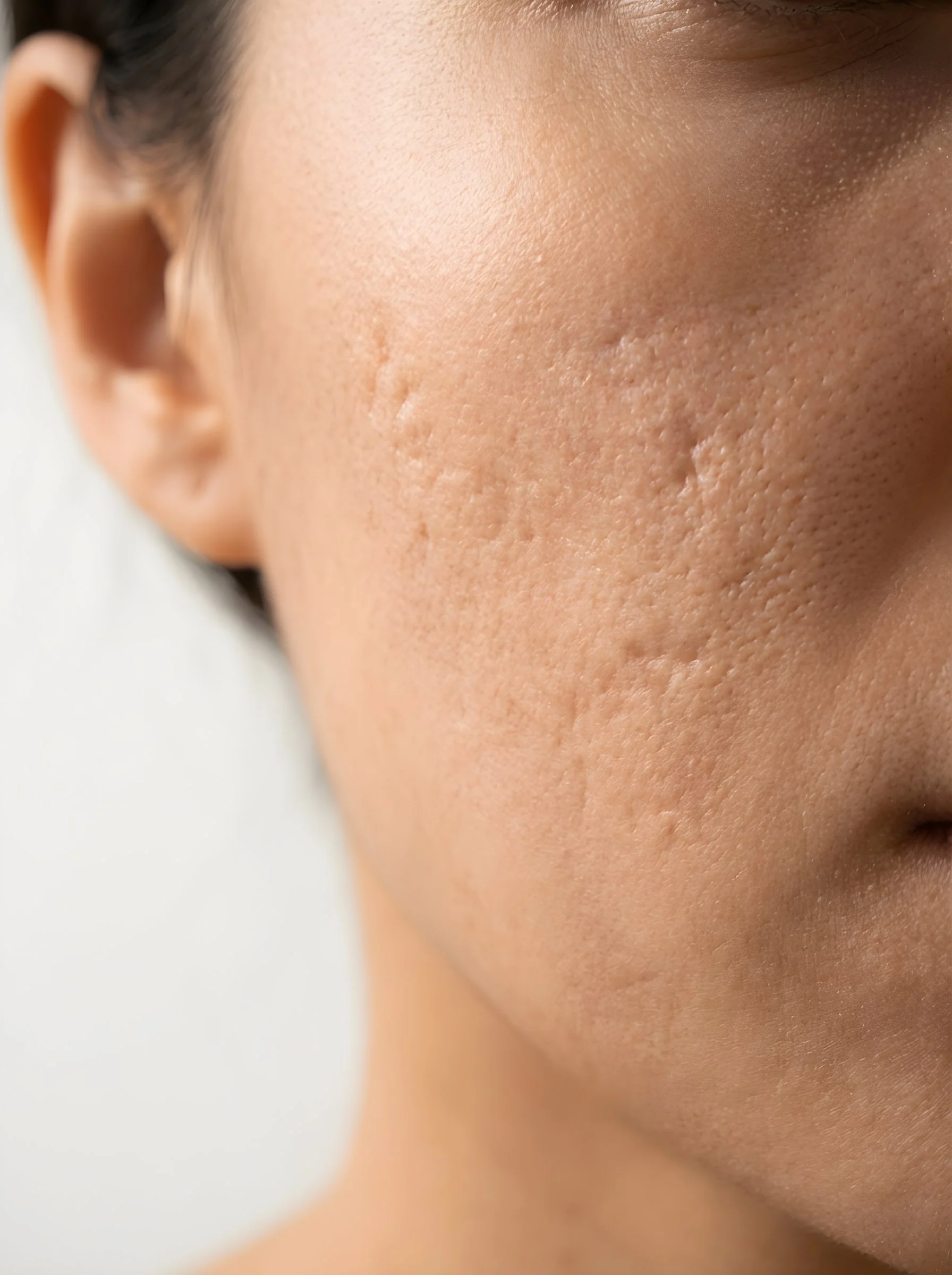
Acne scarring is what remains after the skin has healed from inflammatory acne. The marks left behind range from shallow discolouration to deep structural changes in the dermis, and unlike active breakouts, they do not resolve without targeted treatment.
When inflammation from a breakout penetrates deep enough to damage the dermis, the body's repair process produces collagen to fill the wound. The type of scar that forms depends on how that repair goes. When insufficient collagen is produced, the result is a depressed, atrophic scar. Ice pick scars are narrow and deep. Boxcar scars have defined edges and a flat base. Rolling scars have an undulating surface caused by fibrous bands tethering the skin to deeper tissue. When excess collagen is produced, the result is a raised, hypertrophic scar.
Post-inflammatory hyperpigmentation, the flat discolouration that lingers after a breakout, is a separate process driven by melanin rather than structural collagen changes. It is more common in darker skin tones and typically fades over time, though treatment accelerates this.
Causes
Causes
The severity of scarring is influenced by how deep and how inflamed the original breakout was, how long it was left untreated, and how the individual's skin heals. Cystic and nodular acne carry the highest risk of scarring because the inflammation reaches the deepest layers of the dermis.
- Picking or squeezing lesions significantly increases the likelihood of permanent marks.
- Genetic factors influence both the tendency to scar and the scar type produced.
Daily & Ongoing Care
Daily & Ongoing Care
Preventing new scars is as important as treating existing ones. Active acne that is controlled early produces less dermal damage and fewer permanent marks.
At home:
- SPF 50 or higher daily. Ultraviolet (UV) exposure darkens post-inflammatory pigmentation and delays its resolution.
- Retinoids support cell turnover and can gradually improve the appearance of surface-level scarring and pigmentation over time.
- Vitamin C helps brighten post-inflammatory discolouration and supports collagen synthesis.
- Niacinamide reduces pigmentation and supports barrier function.
- Avoid picking at active breakouts. It is the single most preventable cause of new scarring.
For professional treatments:
- Follow your provider's pre and post-treatment guidance carefully. Many scar treatments involve a recovery period where skin is particularly vulnerable to UV damage and irritation.
- Results from scar treatments build over months, not weeks. Consistency across a course of sessions matters more than any single treatment.
Related
Related Resources
Depending on the type and severity of acne, clinicians may recommend one or a combination of the following treatments:

Not sure what’s right for you?
Schedule a complimentary consultation with our experts to discuss your needs
ARTICLES
Related Articles

Skin Quality Is Everything. Here’s What That Actually Means.
Your skin has a surface quality — texture, tone, radiance — that most aesthetic treatments don’t actually address. It’s a specific thing. And there are specific treatments for it.

Good Results Come From a Single Approach. Remarkable Ones Rarely Do.
Why combining approaches produces outcomes a single method can’t — and what to look for in a provider who does it well.