
Concerns
Post-Inflammatory Hyperpigmentation
What inflammation leaves behind can be addressed.
What's happening beneath the skin
What's happening beneath the skin
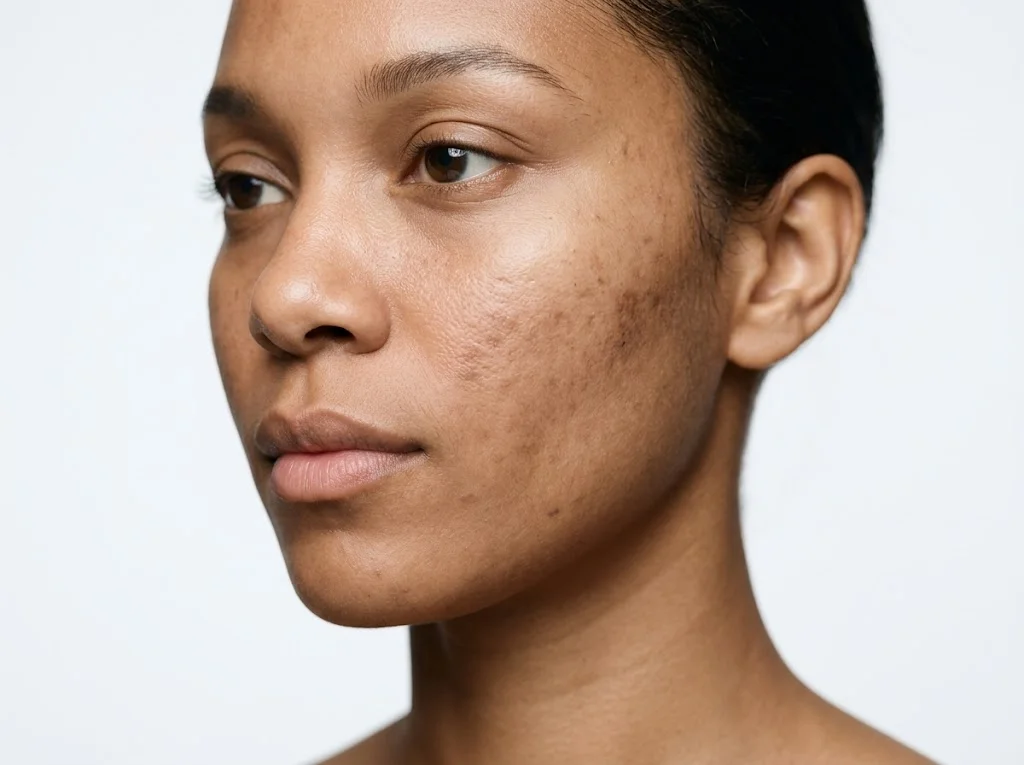
Post-inflammatory hyperpigmentation, or PIH, is the dark discolouration that remains on the skin after inflammation or injury has healed. It is not scarring in the structural sense, but it can be just as persistent, and without the right approach it can linger for months or years.
When the skin experiences inflammation, whether from acne, a burn, or a procedural wound, melanocytes in the affected area respond by increasing melanin production as part of the healing process. In some people this response is disproportionate, and excess melanin is deposited in the healing tissue, leaving a dark mark behind once the inflammation has resolved.
Where the melanin ends up determines how the PIH looks and how it responds to treatment. Epidermal PIH, where melanin is deposited in the upper layers of the skin, appears brown and fades more readily. Dermal PIH, where melanin migrates deeper into the dermis, appears grey or blue-grey and is significantly more resistant. Many patients have a combination of both.
PIH is more common and more pronounced in darker skin tones, where melanocytes are more reactive to inflammatory signals. Fitzpatrick skin types IV through VI are at notably higher risk.
Causes
Causes
Any form of inflammation or skin injury can trigger PIH. Acne lesions are among the most frequent causes, particularly when picked or squeezed. Inflammatory skin conditions such as eczema are another common driver, as are skin procedures that are not calibrated appropriately for the skin type.
The severity of PIH is influenced by the intensity of the original inflammation, the individual's skin tone, and genetic predisposition to melanocyte reactivity. The more inflamed the trigger and the more reactive the melanocytes, the more pronounced and persistent the mark.
Daily & Ongoing Care
Daily & Ongoing Care
Sun protection is critical. Sun exposure darkens existing PIH and significantly delays its resolution. Managing the underlying inflammatory cause is equally important. New inflammation will produce new marks.
At home:
- SPF 50 or higher daily, every day. Consistent sun protection is the single most impactful step for fading PIH faster.
- Niacinamide reduces the transfer of melanin to surface skin cells and is well tolerated by reactive or sensitive skin.
- Azelaic acid has anti-inflammatory and depigmenting properties and is well suited to PIH-prone skin.
- Retinoids accelerate cell turnover and help surface pigmentation fade faster with consistent use.
- Avoid picking at active breakouts or inflamed lesions. It is one of the most direct causes of new PIH.
Professional treatments:
- Sylfirm X targets vascular and pigmentation irregularities at a tissue level and is considered well suited to PIH in reactive or darker skin tones.
- PICO Genesis and StarWalker use picosecond laser pulses to fragment melanin deposits with reduced thermal risk, lowering the chance of worsening PIH during treatment.
- Chemical Peels can accelerate surface cell turnover and improve superficial PIH when calibrated appropriately for the skin type.
All laser and procedural treatments for PIH carry a risk of triggering further pigmentation, particularly in darker skin tones. Provider experience with diverse skin types is an important factor in treatment selection.
Related
Related Resources
Depending on the type and severity of acne, clinicians may recommend one or a combination of the following treatments:

Not sure what’s right for you?
Schedule a complimentary consultation with our experts to discuss your needs
ARTICLES
Related Articles

Skin Quality Is Everything. Here’s What That Actually Means.
Your skin has a surface quality — texture, tone, radiance — that most aesthetic treatments don’t actually address. It’s a specific thing. And there are specific treatments for it.

What Your Aesthetic Expert Sees That You Don't
A trained clinician isn't looking at the concern you came in with. They're looking at the whole picture. Understanding that gap is where better outcomes start.