
Concerns
Pigmentation & Uneven Skin Tone
Uneven tone has causes worth identifying.
What’s happening beneath the skin?
What’s happening beneath the skin?
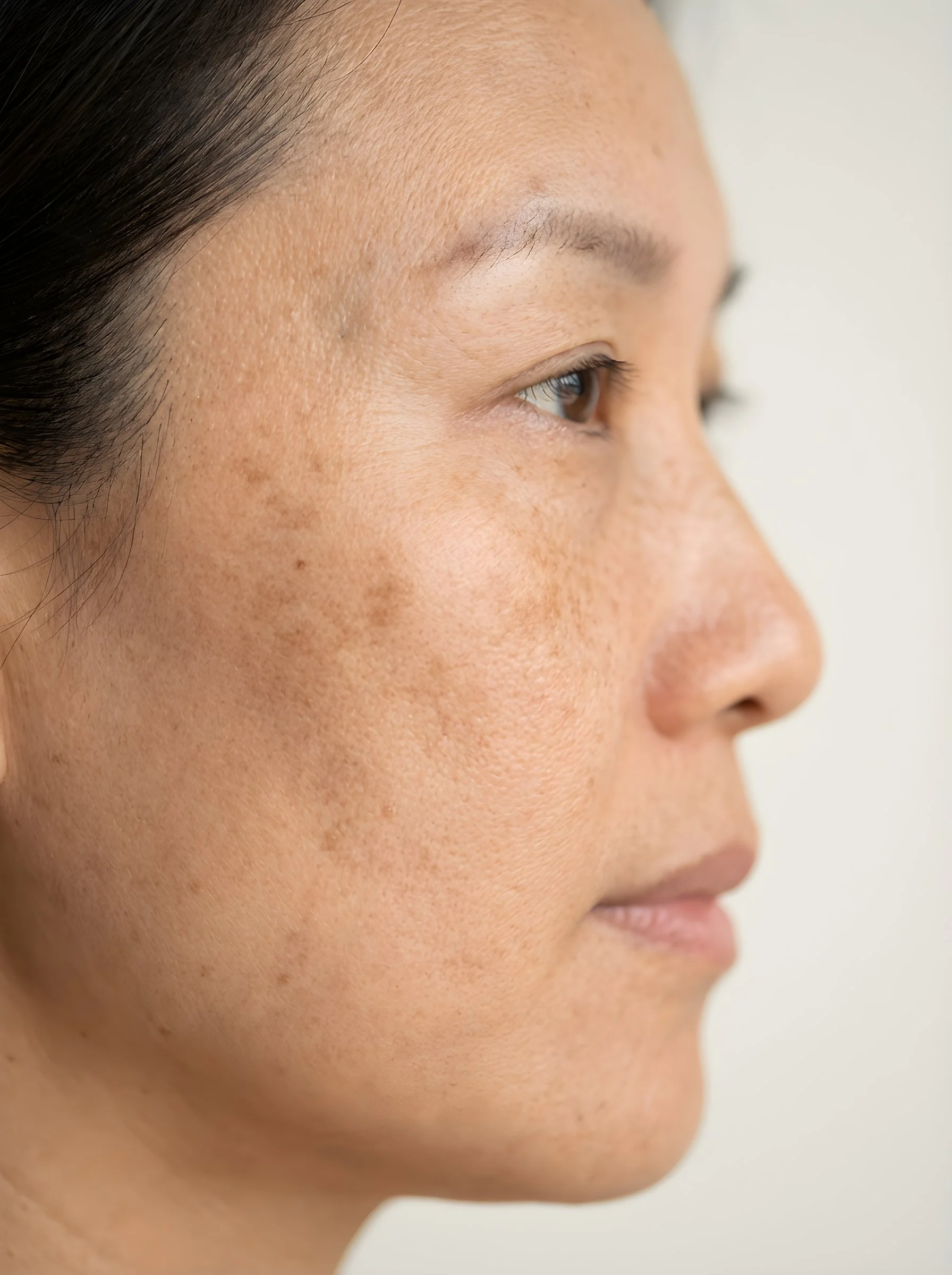
Uneven skin tone and pigmentation develop when the skin's melanin production becomes irregular. The causes vary, from sun exposure to hormonal shifts to inflammation, and the right approach depends on understanding which type you are dealing with.
Skin tone is produced by melanin, a pigment made by specialised cells called melanocytes. In evenly toned skin, melanin is distributed uniformly. Pigmentation irregularities occur when melanocyte activity becomes uneven, producing excess melanin in some areas.
Several different triggers can cause this. Ultraviolet (UV) radiation is the most common, directly stimulating melanocytes to overproduce as a protective response. Inflammation, such as from acne or eczema, activates melanocytes during healing, leaving dark marks behind. Hormonal influences, particularly oestrogen and progesterone, sensitise melanocytes to UV and are responsible for conditions like melasma.
Where the melanin is deposited matters as much as how much is produced. Epidermal pigmentation, sitting closer to the surface, tends to appear brown and responds better to treatment. Dermal pigmentation, sitting deeper, appears grey or blue-grey and is significantly more resistant.
Causes
Causes
- Cumulative UV exposure is the primary driver of most pigmentation irregularities, including age spots, solar lentigines, and diffuse uneven tone.
- Hormonal fluctuations, including those from contraceptives, pregnancy, and hormone replacement therapy, sensitise melanocytes and are the primary driver of melasma.
- Post-inflammatory hyperpigmentation (PIH) occurs when inflammation from acne, eczema, or procedural trauma triggers excess melanin deposition during healing. It is more pronounced in darker skin tones.
- Genetic predisposition influences how reactive melanocytes are and how efficiently the skin clears excess melanin over time. Fitzpatrick skin type is a significant factor in both pigmentation risk and treatment approach.
Daily & Ongoing Care
Daily & Ongoing Care
Sun protection is foundational for all pigmentation concerns. Without it, topical treatments and professional procedures will produce limited or short-lived results.
At home:
- SPF 50 or higher daily, every day. UV exposure worsens pigmentation and reverses treatment progress.
- Vitamin C inhibits melanin production and brightens existing pigmentation with consistent use.
- Niacinamide reduces the transfer of melanin to surface skin cells, evening tone over time.
- Retinoids accelerate cell turnover, helping surface pigmentation shed faster.
- Azelaic acid is particularly useful for post-inflammatory hyperpigmentation and is well tolerated by reactive skin types.
Professional treatments:
- PICO Genesis and StarWalker use picosecond laser pulses to fragment melanin deposits for clearance by the body.
- BBL (Broadband Light) delivers light energy to target surface pigmentation and photoageing with minimal downtime.
- Clear + Brilliant and Fraxel stimulate cell turnover and collagen remodelling, improving tone and texture over a series of sessions.
- Chemical Peels accelerate surface cell turnover and can improve mild to moderate pigmentation.
Related
Related Resources
Depending on the type and severity of acne, clinicians may recommend one or a combination of the following treatments:

Not sure what’s right for you?
Schedule a complimentary consultation with our experts to discuss your needs
ARTICLES
Related Articles

Skin Quality Is Everything. Here’s What That Actually Means.
Your skin has a surface quality — texture, tone, radiance — that most aesthetic treatments don’t actually address. It’s a specific thing. And there are specific treatments for it.

What Your Aesthetic Expert Sees That You Don't
A trained clinician isn't looking at the concern you came in with. They're looking at the whole picture. Understanding that gap is where better outcomes start.